Off-Grid Solar for Homesteads and Cabins: What You Actually Need (2026 Guide)
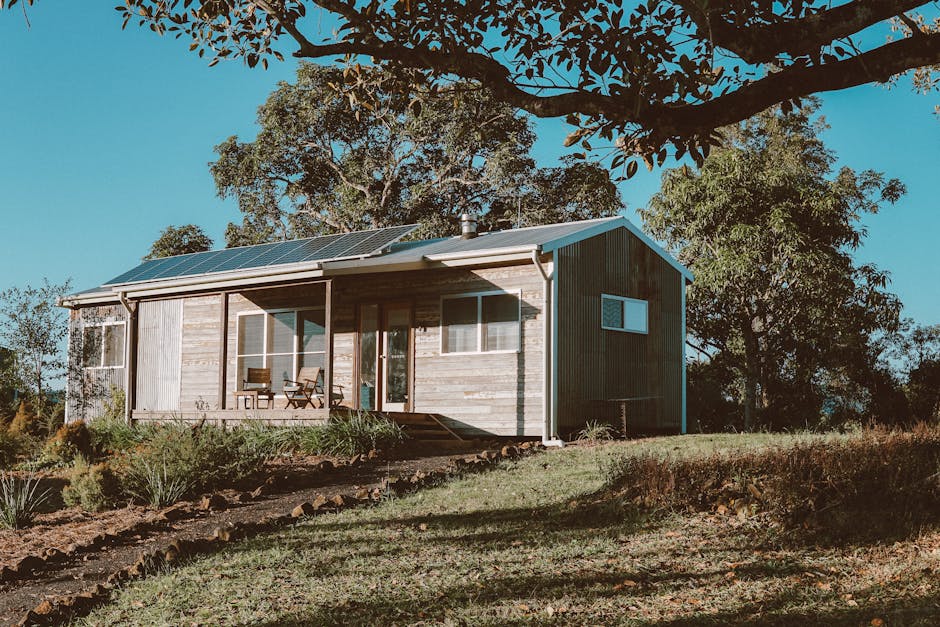
Going off-grid with solar is one of the most satisfying things you can do as a homesteader or cabin owner. No electricity bill, no utility company, no power cuts from grid failures.
But it's also one of the most commonly mis-sized projects in DIY energy. Most guides dramatically underestimate battery requirements or overestimate what a given panel array will produce in winter. This guide gives you the real numbers.
In this guide, you'll learn:
The 5 Components of an Off-Grid Solar System
Every off-grid solar system has the same five elements:
- Solar panels — generate DC electricity from sunlight
- Charge controller — regulates the charging of your battery bank (MPPT type for efficiency)
- Battery bank — stores electricity for use when the sun isn't shining
- Inverter — converts battery DC to household AC (or use 12V/24V DC appliances directly)
- Backup generator — charges the battery bank during extended low-sun periods
The panels and batteries are sized together — they must be matched to your load and your local winter sun hours. Getting this wrong in either direction means either running out of power in January or massively overspending on equipment you don't need.
How Much Solar Do You Need?
Start with your daily electricity consumption in watt-hours (Wh). Add up everything you run:
| Appliance | Typical wattage | Hours/day | Daily Wh |
|---|---|---|---|
| LED lighting (10 bulbs) | 80W | 4h | 320Wh |
| Laptop | 45W | 4h | 180Wh |
| Phone charging | 10W | 2h | 20Wh |
| Fridge (12V DC efficient) | 40W avg | 24h | 960Wh |
| Water pump | 200W | 0.5h | 100Wh |
| TV/entertainment | 80W | 2h | 160Wh |
| Example total | 1,740Wh/day |
Now divide by your location's winter peak sun hours (the number of hours per day equivalent to peak solar irradiance). This is the critical figure most guides get wrong — use winter values, not annual averages:
- Pacific Northwest US / UK / Northern Europe: 2–3 peak sun hours in winter
- Mid-Atlantic / Central Europe: 3–4 hours
- Southern US / Mediterranean: 4–5 hours
- Desert Southwest US: 5–6 hours
Panel array size needed = Daily load ÷ (winter peak sun hours × 0.75 system efficiency factor)
Example: 1,740Wh ÷ (3h × 0.75) = 774W of panels minimum for a cloudy-climate homestead. Round up to 1,000W (4 × 250W panels) to allow headroom.
Always size for your worst-case winter month, not annual average. A system that works great in summer but runs out of power every January is not a functional off-grid system.
Battery Bank Sizing: The Critical Calculation
Your battery bank needs to cover your daily load for your chosen number of "days of autonomy" — the consecutive days you can run without significant solar input.
Rule of thumb: 3–5 days of autonomy for most off-grid homesteads.
Battery bank capacity needed (Wh) = Daily load × Days of autonomy ÷ Usable depth of discharge
- LiFePO4 batteries: 80–90% usable depth of discharge
- Lead-acid (AGM/Gel): 50% usable depth of discharge
Example for 1,740Wh/day, 4 days autonomy, LiFePO4:
1,740 × 4 ÷ 0.85 = 8,188Wh ≈ 8.2kWh battery bank
In practice: 2× 48V 100Ah LiFePO4 batteries (9.6kWh nominal, ~8.2kWh usable) is a common real-world solution for this load profile.
For the same load with lead-acid: 1,740 × 4 ÷ 0.50 = 13,920Wh — you need 70% more battery capacity. This is why LiFePO4 is almost always worth the premium for serious off-grid applications despite higher upfront cost.
Choosing an Inverter
Your inverter must be sized to handle your peak simultaneous load — not your average load. If you run a pump (200W), fridge compressor startup (300W), and microwave (1,000W) simultaneously, your peak load is 1,500W+.
Size your inverter at 1.5–2× your largest expected simultaneous load. A 2,000W pure sine wave inverter handles most homestead loads comfortably. Key specifications:
- Pure sine wave: Essential for sensitive electronics, motors, and compressors. Modified sine wave damages some appliances and should be avoided.
- Battery voltage match: 12V, 24V, or 48V — match your battery bank voltage. 48V systems are most efficient for larger loads.
- Reputable brands: Victron Energy (industry standard, excellent monitoring), Outback Power, Schneider Electric. Cheap Chinese inverters often fail at peak loads.
Many inverters now combine the inverter and charge controller into one unit — an inverter-charger — which simplifies the generator integration and is worth considering for new builds.
Battery Types: LiFePO4 vs Lead-Acid
| Factor | LiFePO4 (Lithium Iron Phosphate) | AGM Lead-Acid |
|---|---|---|
| Usable capacity | 80–90% | 50% |
| Cycle life | 3,000–6,000 cycles | 400–600 cycles |
| Weight (per kWh) | ~7–8 kg/kWh | ~30–35 kg/kWh |
| Temperature performance | Reduced below 0°C (no charging below 0°C) | Reduced below 0°C |
| Maintenance | None | Check electrolyte (flooded) or minimal (AGM) |
| Upfront cost (10kWh) | $3,000–$5,000 | $1,500–$2,500 |
| Lifetime cost per kWh cycled | Much lower | Higher (frequent replacement) |
| BMS required | Yes (usually built-in) | No |
For a homestead used year-round, LiFePO4 is almost always the better long-term investment. Lead-acid makes sense for seasonal cabins used only in summer, very tight budgets, or as a starter system you plan to upgrade.
Backup Generator: When and How Much
Even a well-designed off-grid solar system needs backup power for extended winter cloudy periods. A petrol, diesel, or propane generator that can charge your battery bank prevents the frustration of power rationing during January.
Generator sizing: your inverter-charger's charge rate in amps × battery voltage = charging watts required. A 48V system with a 50A charger needs a 2,400W generator minimum — a 3,500W unit gives comfortable headroom.
Propane generators are popular for homesteads because propane stores indefinitely (unlike petrol), is available in large tanks for rural delivery, and runs cleaner. Diesel is more fuel-efficient but requires rotation of stored fuel.
With a well-sized system, you should need the generator only 5–20 days per year in most climates — far less if you've done the load reduction work covered below.
Reduce Load First: The Most Important Step
Every watt-hour you eliminate from your load is a watt-hour of panels, batteries, and inverter you don't have to buy. Load reduction is the highest-return action in off-grid system design.
Priority load reductions for homesteads:
- Replace propane fridge with a 12V DC compressor fridge: A quality 12V fridge (Dometic, Engel, Iceco) uses 20–50Wh/hour vs 200–300Wh/hour for a propane unit running on electric backup. Massive difference in your daily load.
- Use solar thermal for water heating: Water heating is one of the biggest electrical loads. A solar thermal collector (solar thermal guide →) eliminates this load almost entirely at much lower cost than adding PV panels.
- LED lighting throughout: 10W LED vs 60W incandescent across 10 fixtures saves 500Wh/day — a huge proportion of a cabin's load.
- Avoid high-draw resistive heating: Electric space heaters, kettles, and toasters draw 1,000–2,000W each — a single kettle use consumes what 10 LED bulbs use all day. Use propane or wood for heating and cooking; solar for lighting, devices, and refrigeration.
- Solar stock tank heater: For livestock water, a solar thermal stock tank heater → eliminates the electrical load of a conventional tank heater.
Real System Costs in 2026
| Component | Small cabin (1kWh/day) | Homestead (3kWh/day) | Family home (8kWh/day) |
|---|---|---|---|
| Solar panels | $300–$500 (600W) | $600–$1,000 (1.2kW) | $2,000–$3,500 (4kW) |
| Battery bank (LiFePO4) | $800–$1,200 (5kWh) | $2,000–$3,500 (10kWh) | $6,000–$10,000 (25kWh) |
| MPPT charge controller | $150–$250 | $250–$400 | $500–$900 |
| Inverter (pure sine) | $200–$400 (1kW) | $400–$800 (2kW) | $1,000–$2,000 (5kW) |
| Wiring, fusing, mounting | $200–$400 | $400–$800 | $800–$1,500 |
| Total system cost | $1,650–$2,750 | $3,650–$6,500 | $10,300–$17,900 |
These are DIY costs for sourcing components independently. Professional installation adds 30–60%. Panel prices have dropped dramatically — the battery bank is now the dominant cost in most systems.
For deeper community knowledge on off-grid system design, the DIY solar forums guide → covers the best communities including r/DIYsolar and DIYSolarForum.com where thousands of off-grid system builds are documented in detail.
Frequently Asked Questions
How many solar panels do I need to go off-grid?
It depends entirely on your daily electricity consumption and your winter sun hours. A typical 3kWh/day homestead in a cloudy climate (3 peak sun hours in winter) needs approximately 1,200–1,500W of panels. A sunny climate homestead with the same load needs 800–1,000W. Always calculate based on winter production, not summer or annual average.
What size battery bank for off-grid living?
For 3–5 days of autonomy (the standard for most homesteads) with a 3kWh/day load using LiFePO4 batteries at 85% depth of discharge: 3,000 × 4 ÷ 0.85 = approximately 14kWh of battery capacity. For lead-acid at 50% DoD you need double that — about 24kWh. Battery bank sizing is where most off-grid systems are under-specified; always err toward more storage.
Is LiFePO4 worth it for off-grid solar?
Yes, for year-round use. LiFePO4 provides 3,000–6,000 cycles versus 400–600 for lead-acid, weighs 75% less per kWh, uses 80–90% of nominal capacity versus 50% for lead-acid, and requires zero maintenance. The upfront cost premium typically pays back within 3–5 years on a year-round homestead system. For summer-only seasonal cabins, lead-acid may still be the more economical choice.
Can you run a whole homestead on solar power?
Yes — many do. The key is combining solar generation with aggressive load reduction: 12V DC efficient refrigeration, LED lighting, solar thermal for water and space heating, propane or wood for cooking and backup heating, and no high-draw resistive appliances. A homestead that runs on 3–5kWh/day of carefully chosen loads is very feasible off-grid at reasonable cost. A homestead with standard grid-connected habits (electric range, electric water heater, electric dryer) needs 20–30kWh/day and becomes very expensive to power off-grid.