Portable Solar Powered Heater: What Actually Works and What Doesn't (2026)
Search for "portable solar powered heater" and you will find two very different things: genuine solar heating solutions that work well, and misleading product listings that do not work at all in any meaningful sense.
This guide cuts through both clearly — what is actually possible with portable solar for heating, what the physics allows, which setups genuinely deliver useful heat, and which products you should ignore.

In this guide, you'll learn:
What Actually Works: The Honest Overview
Three approaches genuinely work for portable solar heating. They differ significantly in cost, heat output, and best use case:
| Approach | System cost | Heat output | Works at night? | Portable? | Best for |
|---|---|---|---|---|---|
| Plug-in solar + panel heater | $200–$400 | 200–400W during sun | No | Semi (fixed to outlet) | Renters, any south-facing outlet |
| Portable power station + solar + heater | $400–$1,200 | 200–500W, stored for later | Yes (stored) | Yes — fully mobile | Camping, van, cabin, no-grid spaces |
| DIY solar window air collector | $40–$100 | 200–400W direct thermal | No | Removable (not truly portable) | Fixed south-facing window location |
Option 1: Plug-In Solar Panel + Panel Heater
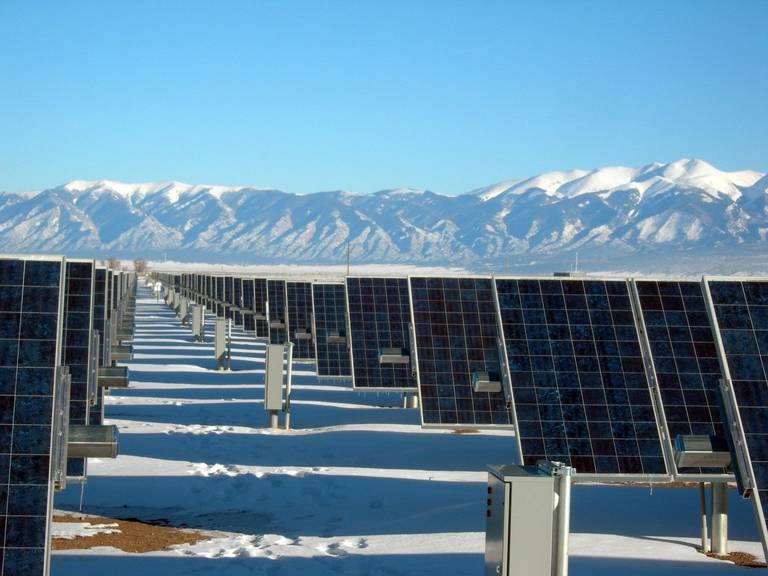
A plug-in solar panel connects directly to a standard wall outlet via a microinverter. The electricity it generates feeds directly into your home circuit, reducing how much you draw from the grid. Pair it with a flat panel electric heater on the same circuit and on sunny days the panel effectively runs the heater for free.
This is the most practical portable solar heating setup for renters and flat dwellers. No roof access needed, no landlord permission required in most countries, no permanent installation.
What to buy
- Panel + microinverter: a 400W panel with a compatible microinverter (Hoymiles HMS-400, APsystems EZ1-M, or similar) costs $150–$250. Mounts on a balcony railing, south-facing window ledge, or ground spike.
- Panel heater: a 300–500W flat panel radiant heater for the room you want to heat — $40–$80. Runs silently, no fan noise, low surface temperature (safe for children).
Realistic output
A 400W panel on a clear south-facing day in a temperate climate produces 1.2–1.8 kWh between 9am and 3pm. Running a 400W panel heater for 3 hours uses 1.2 kWh — so on a good day the panel fully covers the heater's electricity cost. On a cloudy day it offsets some of it. Over a heating season of 100 clear days, the saving is 120–180 kWh — worth $15–$25 at typical electricity rates.
For microinverter certification, compatibility, and the full setup guide, see the microinverter comparison guide →
Option 2: Portable Power Station + Solar Panel + Heater
A portable power station (a large lithium battery with built-in inverter and outlets) combines with a foldable solar panel to create a fully mobile solar heating system. The panel charges the battery during the day; the heater draws from the battery whenever needed.
System sizing
| Use case | Battery needed | Panel needed | Runtime on full charge | System cost |
|---|---|---|---|---|
| Tent / small space, 200W heater | 500Wh | 100–200W | 2.5 hours | $300–$600 |
| Van / caravan, 300W heater | 1,000Wh | 200–400W | 3.3 hours | $500–$900 |
| Off-grid cabin, 500W heater | 2,000Wh | 400–800W | 4 hours | $800–$1,500 |
Important limitation: running a 1,500W space heater from a portable power station is possible but drains even a large battery in under 2 hours. Size your heater to match your battery, not the other way around. A 200–500W low-wattage panel heater paired with a 500–1,000Wh battery is far more practical than a full-power space heater.
Recommended portable power stations for solar heating: EcoFlow DELTA series, Jackery Explorer series, Bluetti AC series. All support solar charging inputs of 200–800W and have standard AC outlets for panel heaters.
Option 3: Solar Window Air Heater (Removable)
A small solar air collector mounted in or over a south-facing window using suction cups, tension rods, or removable adhesive mounts provides direct thermal heating without any electrical conversion. Air from the room enters at the bottom, passes over a black absorber heated by sunlight, and exits warm at the top.
This is technically a fixed installation (the panel sits in the window aperture) but is fully reversible and leaves no permanent marks — making it viable for most rentals. A 0.5m² collector produces 100–200W on a clear winter day. Build cost $40–$80. Full build guide: DIY solar air heater guide →
What Doesn't Work: Products to Avoid
Several product categories marketed as "portable solar heaters" do not deliver meaningful heating:
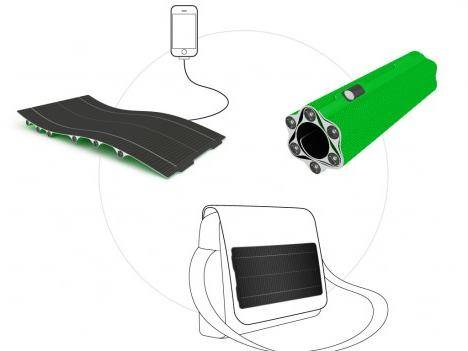
- Small solar-powered fans with heating elements: Typically 5–15W from a small built-in panel. 5W of heat is imperceptible — barely warmer than a mobile phone charger. These are novelty items, not heaters.
- "Solar heater" panels that are actually just passive black absorbers: These are essentially flat black panels that absorb solar radiation. Mounted in a window they provide some radiant warmth but no active airflow. Output is 10–30W in most configurations. Not a heater in any practical sense.
- Products claiming to "store solar heat for days": Without significant thermal mass (kilograms of water or stone) a panel cannot store heat for more than a few minutes after the sun goes in. Marketing claims of multi-day storage from a portable unit are physically impossible without a large insulated thermal mass.
- Solar-heated curtains and window films: These reduce heat loss (useful) but do not actively generate heat. They are insulation products, not heaters.
How Much Heat Can You Realistically Get?
The hard limit is solar irradiance. A south-facing 400W panel in a temperate climate captures 300–500W at peak on a clear winter day. After microinverter losses (3–5%), that is 285–475W of electricity — enough to run a 300W panel heater at full output, or a 500W heater at 60–95% power.
That 300–500W of heat is real and useful in a small, well-insulated room of 10–15m². It is not enough to heat a large room or maintain temperature in a poorly insulated space. Set expectations accordingly: a portable solar heating system is supplemental heat in a specific location, not a whole-room heating replacement.
Best Applications by Situation
| Situation | Best option | Realistic heating |
|---|---|---|
| Renter, south-facing balcony | Plug-in panel + panel heater | Supplemental daytime heat, reduced electricity bill |
| Van life / vehicle living | Power station + foldable panel + low-watt heater | 2–4 hours evening heat from daytime solar |
| Off-grid cabin, no grid | Fixed PV + battery + panel heater | Significant daytime + stored evening heat |
| Tent / camping | Small power station + 100W panel + 200W heater | Short-duration warmth, frost protection |
| Single south-facing room | DIY window air collector (removable) | 100–200W free heat on sunny days |
Want a permanent, higher-output version? A fixed DIY solar air heater on a south wall produces 200–400W per m² and lasts 20+ years at $40–$100 build cost. For a garage or workshop, see the solar powered garage heater guide → For a cabin, see solar powered cabin heater →
Frequently Asked Questions
Do portable solar heaters actually work?
Yes — but only specific types. A 400W plug-in solar panel paired with a low-wattage panel heater genuinely offsets daytime heating electricity costs. A portable power station charged by solar panels can run a small heater for 2–4 hours. What does not work: novelty 5–15W solar fan heaters, passive absorber panels claiming to heat rooms, and any product claiming multi-day heat storage without substantial thermal mass.
How much does a portable solar heater cost?
A plug-in solar panel plus panel heater setup costs $200–$400 for a 400W system. A portable power station plus foldable solar panel plus heater costs $400–$1,200 depending on battery capacity. A DIY solar window air collector can be built for $40–$80. Small novelty solar fan heaters cost $20–$60 but produce negligible heat.
Can a portable solar panel power a space heater?
A 400W panel can power a 300–400W low-wattage panel heater during peak sun hours. It cannot power a full 1,500W space heater from panel output alone — a 1,500W heater requires 4–6× the panel area to run continuously. If you need 1,500W of heat, size your battery storage accordingly: a 2,000Wh battery runs a 1,500W heater for about 80 minutes.