Solar 110V Outlet: How Plug-In Solar Panels Work (Costs & Legal in US/UK/EU)
A solar panel you simply plug into a wall socket sounds almost too good to be true.
But plug-in solar panels — also called balcony solar, Balkonsolar, or solar panel with outlet — are a real and growing product category. Millions of units are installed across Germany, the Netherlands, and Austria, and the concept is finally gaining traction in the US and UK.
The idea is genuinely simple: a solar panel (or two) generates DC electricity, a microinverter converts it to AC at grid frequency, and the cable plugs into a standard household socket. Your home draws from the solar panel first, and any shortfall comes from the grid as normal. No battery, no complicated installation, no electrician required for the basic setup.
In this guide, you'll learn:
- How Plug-In Solar Panels Work
- How Much Power Do They Generate?
- Balcony Solar (Balkonsolar): The European Model
- Setting Up a Plug-In Solar Panel in the US
- Is It Legal? Regulations in US, UK and Europe
- Choosing a Microinverter for Plug-In Solar
- How Much Can You Save?
- Mounting Options: Balcony, Window, Ground
- FAQ
How Plug-In Solar Panels Work
The system has four components:
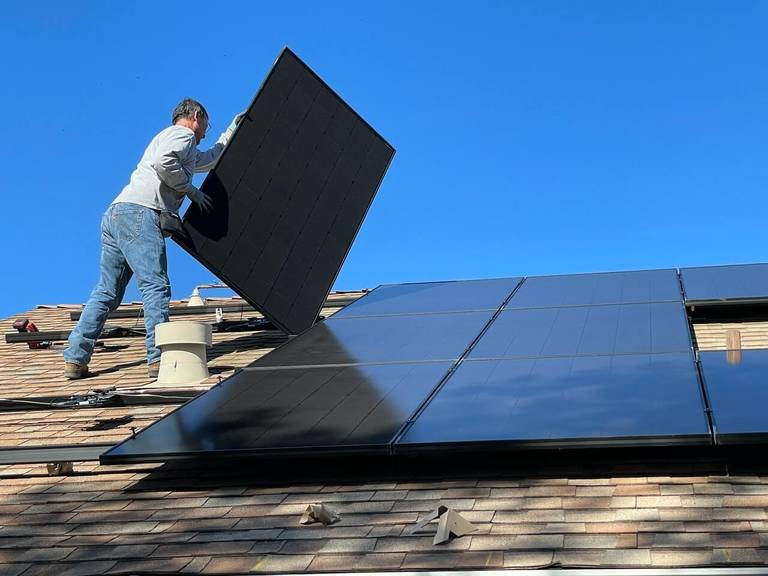
- Solar panel(s) — typically 1 or 2 panels of 400–430W each. Standard monocrystalline panels, identical to rooftop solar.
- Microinverter — converts the panel's DC output to AC at your grid frequency (60Hz in the US, 50Hz in Europe). Key: it synchronises exactly with the grid so grid power and solar power combine seamlessly.
- Safety plug / Wieland connector — a special plug (in Europe, typically a Wieland GST18 connector or Schuko in some countries; in the US, a standard 15A or 20A plug) connects the inverter output to your household circuit.
- Your home's wiring — your appliances draw solar electricity first. When demand exceeds solar output, the grid tops up automatically. When solar exceeds demand, surplus flows back to the grid (or is lost if net metering isn't available — a key consideration).
The critical point: the microinverter matches the grid voltage and frequency exactly. This is what makes plug-in solar safe — it won't energise a dead line or create dangerous conditions if done correctly with a certified inverter. Never plug a panel directly into the grid without a proper grid-tied microinverter.

How Much Power Do They Generate?
A single 400W panel in a good south-facing location with typical mid-latitude sun produces approximately:
- Daily (average over a year): 1.2–1.8 kWh/day
- Monthly: 35–55 kWh/month
- Annually: 400–600 kWh/year
Two panels double those figures: 800–1,200 kWh/year.
To put that in context: the average US household uses about 10,500 kWh/year. A 2-panel balcony system covers roughly 8–12% of average consumption — or significantly more if you're a light energy user in a small apartment.
In Germany, where balcony solar is most mature, the typical "Balkonkraftwerk" (balcony power plant) runs at 600W and saves the average user €150–€250 per year in electricity costs.
Balcony Solar (Balkonsolar): The European Model
Germany has led the world in balcony solar adoption. As of 2024, over 500,000 balcony solar systems were registered in Germany, with the number growing rapidly after regulatory simplification that year.
The German system works like this:
- Permitted up to 800W inverter output (raised from 600W in 2024)
- No electrician required — simple plug-in to Schuko socket or Wieland connector
- Registration with the local grid operator required but simple (online form)
- Tenant-friendly: landlords can only refuse balcony solar in limited circumstances under recent case law
- Payback period: typically 3–5 years at 2025 German electricity prices (€0.30+/kWh)
The Netherlands, Austria, Switzerland, and Belgium have similar frameworks. The UK is developing its own simplified rules. This European experience — millions of units in operation, minimal incidents — provides solid evidence that the technology is mature and safe when done correctly.
Setting Up a Plug-In Solar Panel in the US
The US regulatory environment is less mature than Europe, but plug-in solar is absolutely possible. Here's what a US setup looks like:
The basic components:
- 1–2 standard solar panels (any brand, 300–430W each)
- A UL-listed grid-tied microinverter (Enphase IQ8, APsystems DS3, or similar)
- A 15A or 20A plug appropriate for your outlet type (NEMA 5-15 or NEMA 5-20)
- Mounting hardware appropriate to your location (balcony, window, ground)
Key consideration — net metering: In most US states, if your solar generates more than you consume at that moment, the surplus goes to the grid. Whether you get credit for that surplus depends entirely on your utility's net metering policy. Without net metering, surplus generation is lost. This means plug-in solar is most valuable when you're consuming power during solar hours — running appliances in the daytime.
Permit requirements: In most US jurisdictions, a system under 2kW connected via a standard outlet is either exempt from permit requirements or requires a simple notification. Check your local utility and building department — requirements vary significantly by state and municipality.
Is It Legal? Regulations in US, UK and Europe
| Region | Status | Max size | Registration |
|---|---|---|---|
| Germany | ✅ Fully legal, simplified rules (2024) | 800W inverter | Simple online registration |
| Netherlands | ✅ Legal, widely adopted | 600W | Varies by utility |
| Austria | ✅ Legal | 800W | Simple registration |
| UK | 🟡 Legal but no specific simplified framework yet | 3.68kW (G98) | G98 notification for larger systems |
| USA | 🟡 Legal in most states under NEC 705.12 | Varies by state | Check local utility |
| Canada | 🟡 Varies by province | Varies | Check provincial authority |
The key US electrical code is NEC 705.12 which covers "supply-side and load-side connection" for small generation. Many jurisdictions have adopted rules allowing plug-in solar under specific conditions. The safest approach is to use a UL-listed microinverter, connect to a dedicated 20A circuit if possible, and notify your utility.
Choosing a Microinverter for Plug-In Solar
The microinverter is the most important component. It must be:
- Grid-tied (not off-grid) — it must synchronise with your grid frequency
- Certified — UL 1741 in the US, VDE-AR-N 4105 in Germany, G98/G99 in the UK
- Appropriately sized — match to your panel wattage (a 400W panel needs a ≥400W inverter)
Established options that work well for plug-in setups:
- Enphase IQ8MC — the gold standard, US-certified, excellent monitoring app. More expensive but most reliable.
- APsystems DS3 — dual-panel microinverter, good value for 2-panel systems, UL-listed
- Hoymiles HM-600/800 — very popular in Europe for Balkonsolar, not UL-listed for US use
- AEconversion INV350-45 — European specialist, high quality
Avoid cheap uncertified inverters. The certification matters for safety and for your homeowner's insurance.
For a detailed Enphase vs APsystems vs Hoymiles comparison including full certification tables (UL 1741, UL 1741 SA, VDE, G98) and 2026 pricing, see the complete microinverter comparison guide →
How Much Can You Actually Save?
Let's run the real numbers for a 2-panel (800W) south-facing balcony system:
| Location | Annual generation | Electricity price | Annual saving | Payback (system cost $600) |
|---|---|---|---|---|
| Phoenix, AZ | ~1,400 kWh | $0.13/kWh | ~$182/year | ~3.3 years |
| New York, NY | ~1,000 kWh | $0.22/kWh | ~$220/year | ~2.7 years |
| London, UK | ~750 kWh | £0.28/kWh | ~£210/year | ~2.9 years |
| Berlin, Germany | ~800 kWh | €0.30/kWh | ~€240/year | ~2.5 years |
These savings assume you consume all generated electricity directly (no net metering needed). In practice, daytime users (home workers, retirees) capture almost all the benefit. Night-shift workers who are absent during solar hours capture much less — for them, a battery buffer adds value.
Want city-by-city savings data with a payback calculator? See how much balcony solar actually saves by location → — real kWh figures for Phoenix, New York, London and Berlin with self-consumption optimisation tips.
Mounting Options: Balcony, Window, Ground
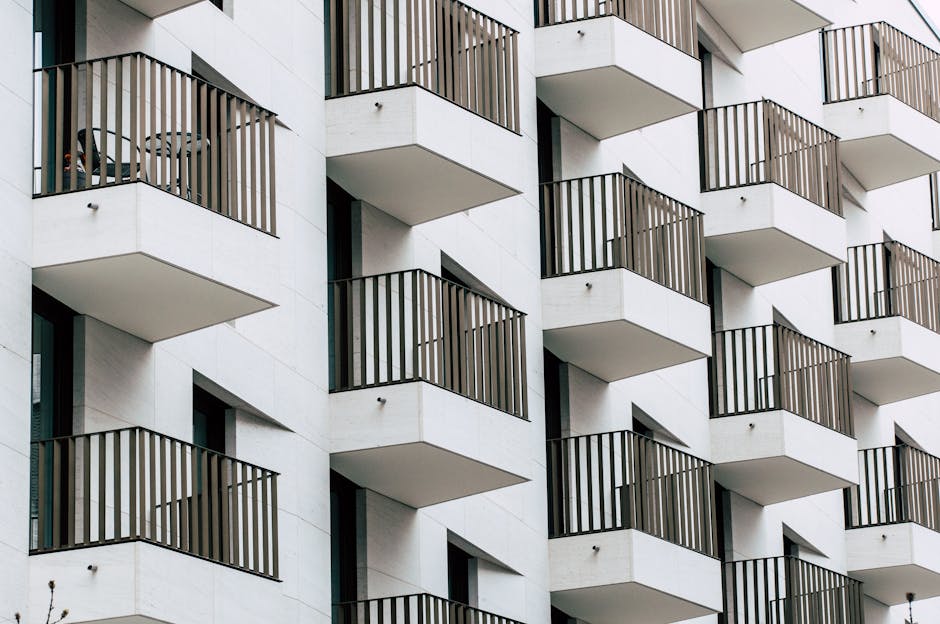
Balcony railing mount: The most common European approach. Panels mount vertically on the balcony railing at 90° or angled brackets. Vertical mounting loses 15–25% of output vs optimal tilt but is structurally simple and visually acceptable. A 400W panel at 90° vertical south-facing produces the equivalent of roughly a 300–320W optimally tilted panel.
Balcony floor mount: Angled frames on the balcony floor at 30–40° tilt. Best output but requires floor space and may need landlord approval.
Window mount: The original "plug it on the window" concept — a compact panel that hooks over the window frame or mounts with suction brackets. Limited to smaller panels (typically 100–200W) but requires no balcony at all. Ideal for renters with no outdoor space.
Ground mount (garden): If you have a garden, ground-mounted panels on simple frames with a long cable to the nearest outdoor socket are the simplest setup with optimal tilt and orientation.
Want to store your surplus solar generation as heat? If your plug-in system generates more than you consume during the day, a thermal storage system — water tank, sand battery, or passive thermal mass — stores that surplus energy at a fraction of battery storage cost. See the solar thermal storage comparison guide →
Frequently Asked Questions
Can I plug a solar panel into a regular outlet?
Yes, with a proper grid-tied microinverter between the panel and the plug. Never connect a solar panel directly to a socket without an inverter — the raw DC from a panel is not compatible with your home wiring and is dangerous. With a certified microinverter, the output is standard AC that is safe to plug into a regular outlet.
How much power does a plug-in solar panel produce?
A single 400W panel in a good south-facing location produces approximately 1.2–1.8 kWh per day on average, or 400–600 kWh per year. Two panels produce roughly double. Output varies significantly by location, orientation, and season.
Is balcony solar legal in the US?
Yes, in most jurisdictions under NEC 705.12, with a UL-listed microinverter and compliance with your utility's interconnection requirements. Requirements vary by state and municipality — check with your local utility before installing. Some utilities require a simple notification; others have more detailed requirements for systems feeding into the grid.
What is the difference between balcony solar and rooftop solar?
Rooftop solar is a permanent installation requiring permits, electrician work, roof penetrations, and a full grid interconnection agreement. Balcony solar (plug-in solar) is a portable, renter-friendly system that plugs into an existing socket with no structural modifications. It's much smaller (typically 400–800W vs 4–10kW for rooftop), lower cost ($400–$800 vs $8,000–$25,000), and has a much faster payback period.
What microinverter should I use for a plug-in solar panel?
For US installations: Enphase IQ8MC or APsystems DS3 are the most reliable certified options. For European installations: Hoymiles HM-600/800, AEconversion, or Deye SUN-M80 are popular Balkonsolar choices. Always use a microinverter that is certified to the standard applicable in your country (UL 1741 for US, VDE-AR-N 4105 for Germany).
Related Guides
- Homemade Sand Battery: DIY Build Guide and Honest Pros and Cons
- How to Store Solar Energy as Heat: Sand Batteries, Water Tanks and Thermal Mass
- DIY Solar Air Heater: How to Build One for Under $100
- Water Tank Thermal Storage Guide
- Solar Space Heaters: Best Options and DIY Builds
- Passive Solar Heating for Homes: Trombe Walls, Direct Gain, Sunspaces
- How to Heat a Greenhouse Cheaply: 7 Methods Ranked
- Greenhouse Subterranean Heating and Cooling System Build Guide