Solar Hot Water Heater for Home: How It Works, Real Costs and Is It Worth It in 2026?
A solar hot water system is one of the most cost-effective renewable energy investments a homeowner can make. Unlike solar PV — which converts sunlight to electricity at 18–22% efficiency — solar thermal collectors convert sunlight directly to heat at 60–80% efficiency. The technology is mature, the payback periods are well-established, and the systems require minimal maintenance.
Here is everything you need to make an informed decision: how the systems work, realistic cost figures for 2026, annual savings by location, and an honest assessment of when it is and is not worth doing.
In this guide, you'll learn:
- How a Solar Hot Water System Works
- Flat Plate vs Evacuated Tube Collectors
- How Much Hot Water Can Solar Actually Provide?
- Installation Costs in 2026
- Annual Savings by Location
- Payback Period: Is It Worth It?
- DIY Solar Hot Water: What Is and Isn't Realistic
- Solar Thermal vs PV + Heat Pump: Which Is Better?
- FAQ
How a Solar Hot Water System Works
A solar hot water system has four main components:
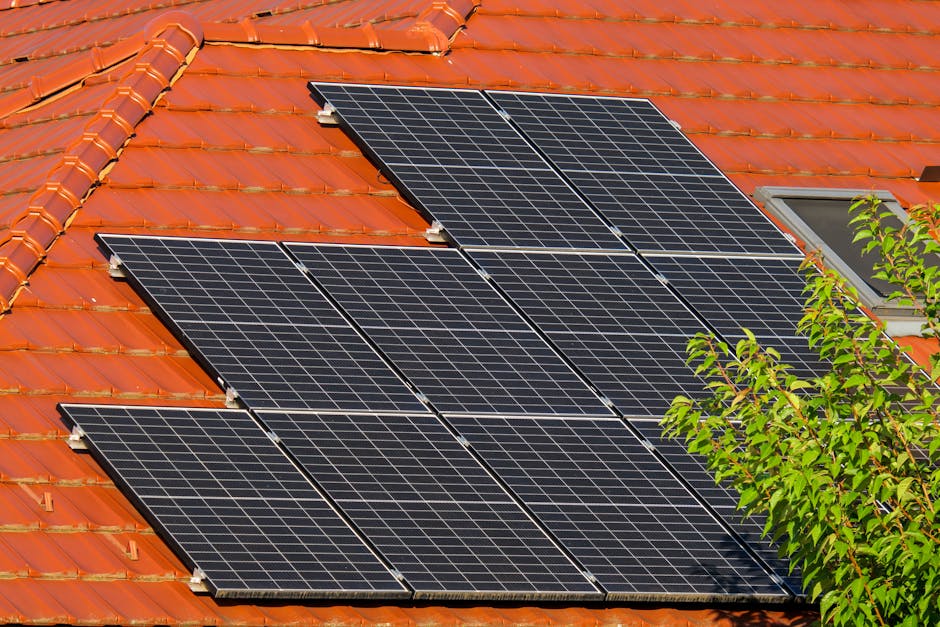
- Solar collector — mounted on a south-facing roof or wall, absorbs solar radiation and converts it to heat in a fluid (typically water or a glycol antifreeze mixture).
- Storage cylinder — an insulated hot water tank, usually 200–300 litres, with a heat exchanger coil through which the collector fluid passes, transferring heat to the stored water.
- Pump and controller — a small circulation pump moves collector fluid between the panel and the cylinder. A differential temperature controller turns the pump on when the collector is hotter than the cylinder and off when it is not.
- Backup element — an immersion heater or connection to the boiler tops up the cylinder when solar output is insufficient. Most systems in temperate climates rely on backup for 30–50% of annual demand.
The fluid loop can be direct (potable water circulates through the collector — simple but freezes in cold climates) or indirect (glycol antifreeze circulates in a sealed loop, transferring heat through a coil to the water tank — the standard for most climates).
Flat Plate vs Evacuated Tube Collectors
| Feature | Flat plate collector | Evacuated tube collector |
|---|---|---|
| Efficiency (summer) | 60–70% | 70–80% |
| Efficiency (winter/low sun) | 40–55% | 60–75% |
| Cost (2m² panel) | £300–£500 | £400–£700 |
| Durability | 25–30 years | 20–25 years |
| Appearance | Flat, low-profile | Tubular, visible |
| Snow performance | Poor — snow sits on flat surface | Better — round tubes shed snow |
| Overheating risk | Lower | Higher in summer |
| Best for | Mild to moderate climates | Cold climates, winter heating priority |
For most UK, western European, and northern US installations, flat plate collectors are the standard choice — simpler, cheaper, and well-proven over decades. Evacuated tubes are worth the premium in climates with harsh winters and significant cloud cover, where their superior low-light performance justifies the extra cost.
How Much Hot Water Can Solar Actually Provide?
The standard calculation for a domestic solar hot water system:
- A 2-person household uses approximately 80–100 litres of hot water per day at 60°C.
- A 4-person household uses approximately 160–200 litres per day.
- A 2–2.5m² solar collector system in the UK or northern Europe provides roughly 1,200–1,800 kWh of heat per year.
- Heating 160 litres from 15°C to 60°C requires approximately 2.9 kWh per day — 1,060 kWh per year for a 4-person household.
A correctly sized system therefore covers 50–80% of annual domestic hot water demand in the UK, 60–90% in sunnier climates (southern Europe, US Southwest, Australia).
| Location | Annual solar fraction | Summer coverage | Winter coverage |
|---|---|---|---|
| Scotland / northern Norway | 40–55% | 85–95% | 5–15% |
| England / central Europe | 50–65% | 90–100% | 10–25% |
| Spain / Portugal / southern US | 70–85% | 100% | 40–60% |
| Mediterranean / North Africa | 80–95% | 100% | 60–80% |
Solar hot water output is highest in summer — when you arguably need it least — and lowest in winter. This is why the backup element is essential, and why the payback calculation must be based on annual figures rather than peak performance.
Installation Costs in 2026
| System type | UK cost (installed) | US cost (installed) | Collector area | Suitable for |
|---|---|---|---|---|
| Flat plate, indirect, 2-panel | £3,000–£5,000 | $4,000–$7,000 | 3.6–4.4 m² | 2–3 person household |
| Flat plate, indirect, 3-panel | £4,000–£6,500 | $5,500–$9,000 | 5.4–6.6 m² | 4–5 person household |
| Evacuated tube, 20-tube system | £3,500–£5,500 | $4,500–$8,000 | ~3 m² equivalent | 3–4 person household, cold climate |
| Thermosyphon (gravity-fed, no pump) | £1,500–£2,500 | $2,000–$4,000 | 2–3 m² | Mild climates only, simpler installation |
These figures include panels, cylinder, pump, controller, pipework, and installation labour. Grant availability varies significantly — in the UK, the Boiler Upgrade Scheme does not cover solar thermal; check current MCS-registered installer grants. In the US, the federal residential clean energy credit covers 30% of installation costs through 2032.
Annual Savings by Location
Based on a 4-person household with a 3-panel flat plate system (5.4m²):
| Location | Annual kWh saved | Saving vs gas (€0.10/kWh) | Saving vs electricity (€0.25/kWh) |
|---|---|---|---|
| UK / Germany | 1,400–1,800 kWh | €140–€180/year | €350–€450/year |
| France / Spain | 1,800–2,400 kWh | €180–€240/year | €450–€600/year |
| Mediterranean | 2,400–3,200 kWh | €240–€320/year | €600–€800/year |
| US (northern states) | 1,200–1,600 kWh | $150–$200/year | $200–$280/year |
| US (southern states) | 1,800–2,600 kWh | $225–$325/year | $300–$450/year |
Payback Period: Is It Worth It?
Honest payback analysis for a UK 4-person household replacing electric immersion heating:
- System cost: £4,500 installed
- Annual saving at £0.25/kWh electricity: £375–£450
- Simple payback: 10–12 years
- System lifespan: 20–25 years
- Net lifetime saving over 20 years: £3,000–£4,500 after installation cost
Replacing gas hot water is less favourable — gas costs roughly £0.07/kWh in the UK, giving savings of only £100–£130/year and a simple payback of 35+ years. Solar thermal makes the most financial sense when replacing electric immersion heating, in high-sun climates, or where the 30% US federal tax credit applies.
Where solar thermal is clearly worth it:
- Replacing electric immersion heating in the UK, Europe, or Australia
- Any location in the US (30% federal tax credit brings installed cost down to £3,150 for a £4,500 system)
- Southern Europe or Mediterranean — higher solar yield shortens payback to 7–9 years
- New builds where cylinder and plumbing costs are already sunk
Where solar thermal is harder to justify:
- Replacing cheap gas heating in the UK or Germany (long payback)
- Properties with significant shading or no suitable south-facing roof
- When combined heat pump (ASHP + hot water) is the alternative — a well-sized heat pump system is often more cost-effective per kWh
DIY Solar Hot Water: What Is and Isn't Realistic
Building a basic solar hot water system is feasible for confident DIYers but has important limitations:
A batch system (also called an ICS — integrated collector-storage) is the simplest DIY option. A black painted tank in an insulated glazed box mounts on a south-facing slope; cold water enters from the mains, sits in the sun all day, and warm water flows to the tap by gravity or pressure. No pump, no controller, no heat exchanger. Works well in mild climates where the tank won't freeze. Build cost: £50–£150 for a 50–80 litre unit.
A thermosyphon system uses natural convection rather than a pump — the storage tank is mounted above the collector, hot water rises and cold water sinks, circulating without electricity. More complex to build than a batch system but usable in slightly colder climates. Build cost: £150–£300.
For a pumped indirect system with glycol freeze protection — the standard professional installation — DIY is not recommended unless you have plumbing and electrical experience. The glycol loop, pressure relief valve, and expansion vessel require correct sizing for safety.
For storing heat from a PV dump load rather than a solar thermal collector, a standard hot water cylinder with an immersion element is by far the simplest approach. See the DIY water tank thermal storage guide → for full build instructions.
Solar Thermal vs PV + Heat Pump: Which Is Better?
This is the most important strategic question for anyone considering solar hot water in 2026. The landscape has shifted significantly in the last 5 years:
| Comparison point | Solar thermal | PV + air source heat pump |
|---|---|---|
| Efficiency (sunlight to heat) | 60–80% | 15–20% PV × 300% COP = 45–60% |
| Flexibility | Hot water only | Heating + hot water + electricity |
| Installation cost (4-person) | £4,000–£6,500 | £7,000–£14,000 (ASHP) + £5,000–£9,000 (PV) |
| Payback (vs electricity) | 10–12 years (UK) | 8–15 years combined system |
| Maintenance | Low — fluid check every 3–5 years | Medium — annual heat pump service |
| Best for | Hot water only, tight budget | Full home decarbonisation |
If your goal is purely hot water, solar thermal is cheaper and simpler. If your goal is decarbonising your whole heating system, the ASHP route is more capable — but solar thermal can be a practical, lower-cost first step while you save for a heat pump.
Want to store heat without a solar thermal collector? A DIY water tank thermal store charged by surplus PV electricity achieves much of the same result at lower cost — no glycol loop, no installer, no roof penetration. The solar thermal storage comparison guide puts all methods side by side.
Frequently Asked Questions
How much does a solar hot water system cost in 2026?
A professionally installed 2–3 panel flat plate solar hot water system costs £3,000–£6,500 in the UK and $4,000–$9,000 in the US (before incentives). In the US, the federal residential clean energy credit covers 30% of costs. Thermosyphon systems in mild climates cost £1,500–£2,500 installed. DIY batch systems can be built for £50–£300.
Is a solar hot water heater worth it?
Yes — if replacing electric immersion heating, in high-sun climates, or where significant tax credits apply. A UK household replacing electric heating saves £375–£450/year, giving a 10–12 year payback on a £4,500 system over a 20–25 year lifespan. Replacing gas heating gives a much longer payback and is harder to justify financially.
How much hot water does a solar panel produce?
A 2m² flat plate collector in central England produces approximately 800–1,100 kWh of heat per year. A 2-person household uses roughly 800–1,000 kWh per year for hot water — so a 2m² system covers approximately 50–70% of demand. In southern Europe or the US Southwest, the same panel produces 1,200–1,600 kWh, potentially covering 80–100% of demand in summer months.
What is the difference between solar PV and solar thermal?
Solar PV (photovoltaic) panels convert sunlight to electricity at 18–22% efficiency. Solar thermal collectors convert sunlight directly to heat at 60–80% efficiency. For hot water specifically, solar thermal is more efficient per m² of roof space, but solar PV is more flexible — the electricity it generates can power anything, not just water heating. Both can contribute to hot water needs: thermal directly, PV via a dump load controller charging an immersion heater.